
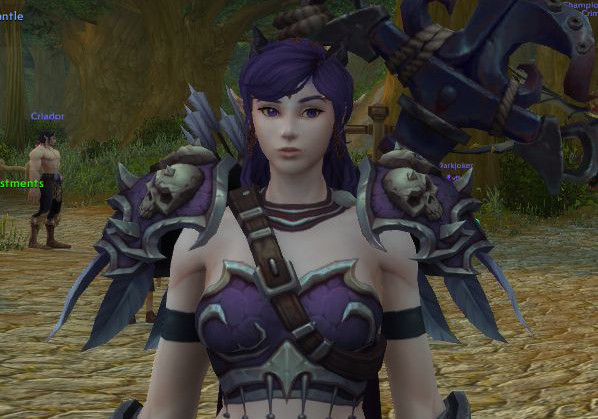
In 2013, artist Angela Washko released Playing a Girl, a video assembled from conversations she initiated inside World of Warcraft. The project grew out of the time she spent moving through the game’s cities and chat channels, approaching other players and asking them questions about gender, representation, and the treatment of women in gaming culture.
The premise is straightforward. Washko walks up to other avatars and begins talking. She asks players about sexism, about the popularity of female characters, and about the kinds of remarks that circulate in online multiplayer spaces. The exchanges appear exactly as they happen in the game’s chat window. Some players respond casually, others become defensive or dismissive, and occasionally someone pauses long enough to consider the question more carefully.
Massively multiplayer games like World of Warcraft are often described through their fantasy settings and elaborate quest systems. Yet the experience of playing them is also social. Guilds form, friendships develop, and conversations stretch across hours of shared gameplay. The game’s world becomes a place where large groups of people spend time together, sometimes for years.
Washko approached that environment as a site for observation. Rather than following the game’s storyline, she used her avatar as a way of entering discussions that the game itself never addresses. The encounters that make up Playing a Girl reveal something about the atmosphere of those spaces and the assumptions that shape everyday interactions between players.
Seen today, the video feels like a small record of the social life of early online gaming communities. Many of the dynamics that appear in these exchanges would later become more widely visible across the internet. In Playing a Girl, they surface in the casual, unfiltered conversations that unfold between strangers sharing the same virtual world.